
Criminal Court Cases in Humboldt County
The Superior Court of California, County of Humboldt Criminal Division maintains felony, misdemeanor, and criminal disposition records. The county does not divide these matters among separate city criminal courts. Cases originating with the sheriff, Eureka Police, Arcata Police, Fortuna Police, or another local agency ultimately route to this Superior Court when prosecutors file charges.
The courthouse at 825 5th Street in Eureka houses courtrooms, while case inquiries, filing, payments, and the Criminal/Traffic Division operate at 421 I Street. The clerk is the custodian of the court case file. A DOJ rap sheet is a different statewide record assembled from fingerprint-supported events, not a substitute for the pleadings and docket maintained in Humboldt County.
The court's Criminal Division page shows where that local responsibility begins.
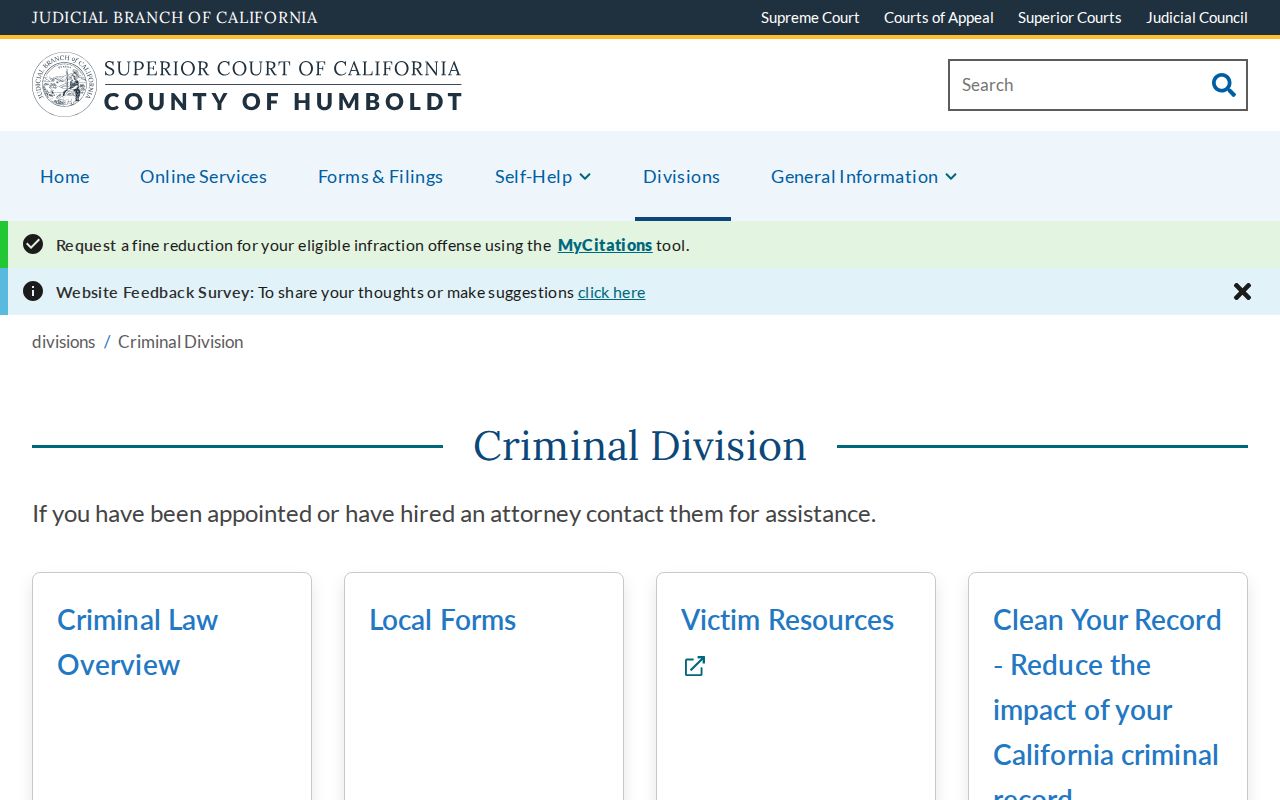
That division is the authoritative starting point for filings, disposition records, and copy instructions.
Criminal/Traffic Copies at 421 I Street
The Criminal/Traffic Division accepts copy requests in person and by mail. Its public counter is at 421 I Street, Eureka, CA 95501, and its stated hours are 9 a.m. to 2 p.m. Call 707-445-7256 and choose option 1, or use the toll-free line at 866-608-1804. Courtroom Services at 825 5th Street operates 8 a.m. to 5 p.m., but the records and copy channel is the I Street division.
Criminal/Traffic Division
421 I Street
Eureka, CA 95501
707-445-7256, option 1
866-608-1804
Public hours: 9 a.m.-2 p.m.
For a written request, provide the defendant's name and date of birth, the case number if known, a list of the documents wanted, and your name, address, and telephone number. The clerk determines the cost after identifying the documents, contacts the requester, and mails the copies after payment and receipt of a self-addressed stamped envelope.
Humboldt County Case Record Searches
Use the local search tools as indexes, not as promises that every document is online. The ePay-it case and ticket search accepts a known case or ticket number and also provides a name-based route. Court calendars answer a narrower question about near-term hearings. Detailed filings and disposition copies still come from the clerk.
- Open ePay-it and use the case or ticket number when available; it is the most direct identifier.
- For a name search, enter first and last name with date of birth. A middle name is optional and can help distinguish similar results.
- Check the court calendar separately when the objective is an imminent appearance rather than a complete case history.
- Confirm that the result belongs to the correct person by comparing identifiers and case context, not name alone.
- Ask the Criminal/Traffic Division for the specific pleadings, disposition, judgment, or certified copy needed.
| Field Label | Type | Required | Notes |
|---|---|---|---|
| Case or ticket number | Text | No | Best route when the exact identifier is known. |
| First name | Text | Name route | Used with last name and date of birth. |
| Last name | Text | Name route | Check spelling and former names when appropriate. |
| Date of birth | Date | Name route | Helps separate people who share a name. |
| Middle name | Text | No | Optional narrowing field. |
The manifest's ePay-it search capture illustrates this local entry point.
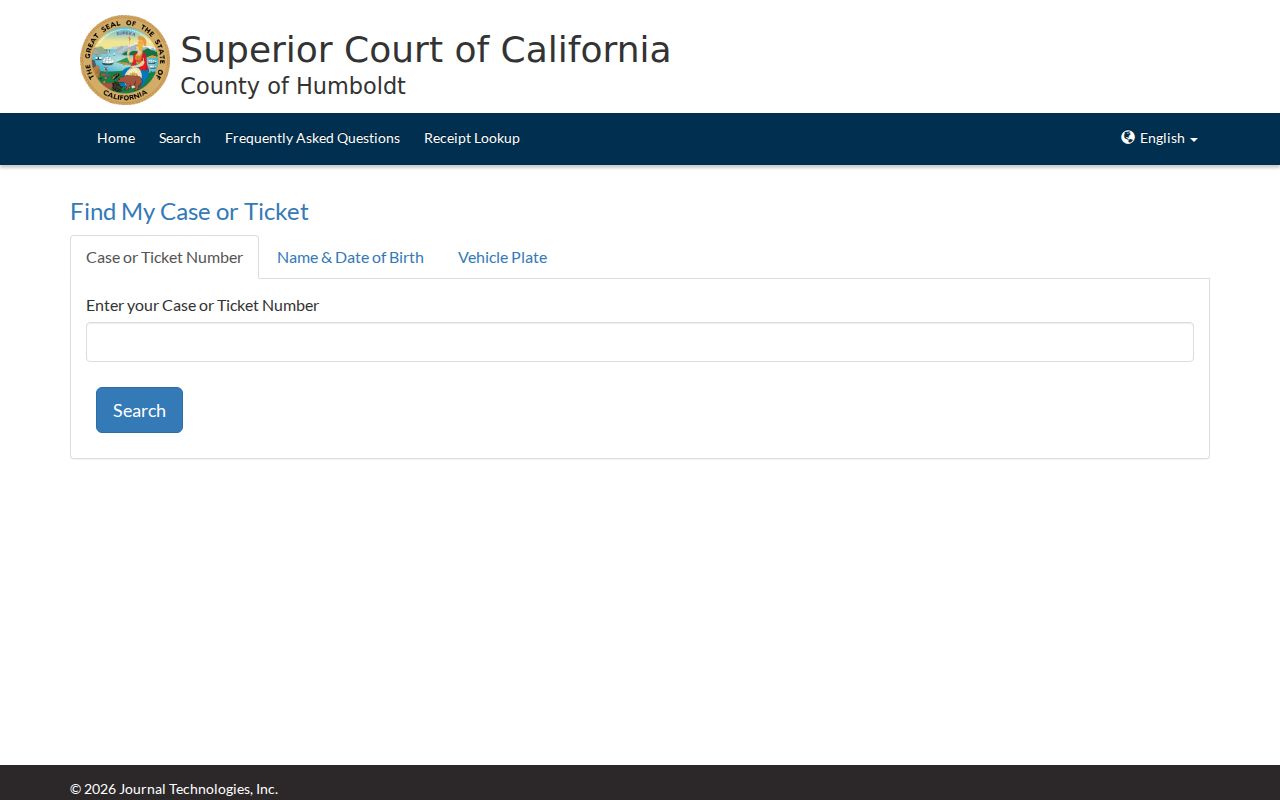
Its limited fields make accurate names, birth dates, and case numbers especially valuable.
Humboldt Court Calendar Limits
The judicial assignments and calendars cover the current business day until 3:45 p.m. and the next business day after that cutoff. A calendar may show a party, courtroom, time, case type, and remote appearance details, including a meeting ID or telephone number.
Confidential case types may not appear at all, or may appear without a person's name. A missing calendar entry therefore does not establish that no case exists. For uncertainty, call Court Operations at 707-445-7256 and then use the clerk copy channel if the underlying file is needed.
The official calendar and assignment capture demonstrates the short time window.
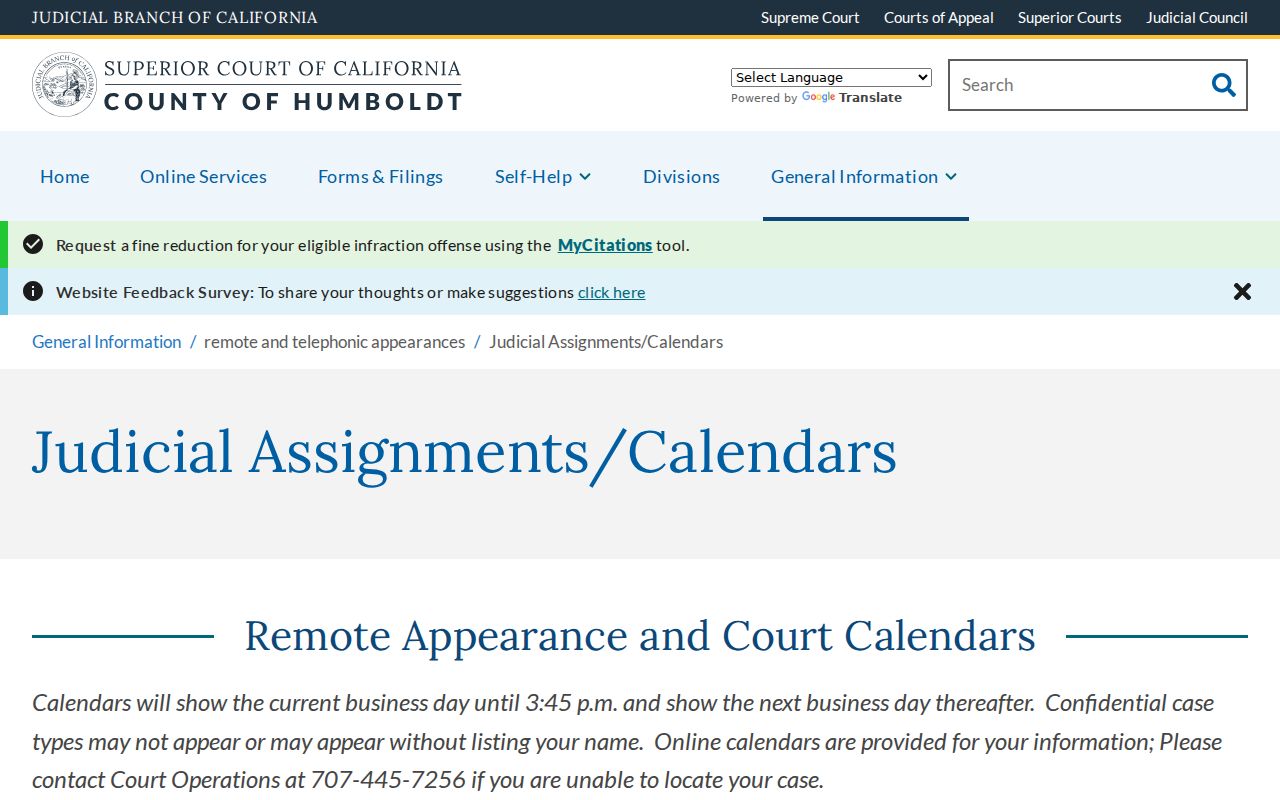
Use that view for scheduling, then return to the clerk for the durable case record.
What a Criminal Case File Contains
A Humboldt County criminal file follows the prosecution after charges are filed. It can answer what offense the district attorney alleged, how the defendant pleaded, what occurred at hearings, whether a plea or trial resolved the case, and what sentence the judge imposed. That scope is narrower than a statewide DOJ record, but far deeper on a single prosecution.
| Case Number & Court | The local identifier and Humboldt Superior Court division responsible for the matter. |
|---|---|
| Charging Document | The filed allegations, which can differ from the initial arrest description. |
| Docket Entries | A chronological register of filings, hearings, orders, and procedural events. |
| Hearing Dates | Past and scheduled appearances, subject to confidentiality and calendar limits. |
| Disposition & Judgment | The result, such as dismissal, plea, acquittal, or conviction, and the formal judgment. |
| Sentence & Conditions | Custody, probation, fines, and other court-ordered terms when publicly available. |
Copy Costs Follow Document Selection
Humboldt Superior Court does not require a requester to guess the final copy total before the clerk locates the file. Identify the documents precisely, then the clerk calculates the amount and contacts you. The court publishes its fee and bail schedules, but the research does not establish one universal price for every criminal-file request.
The court's fee schedule capture helps distinguish published court charges from a request-specific total.
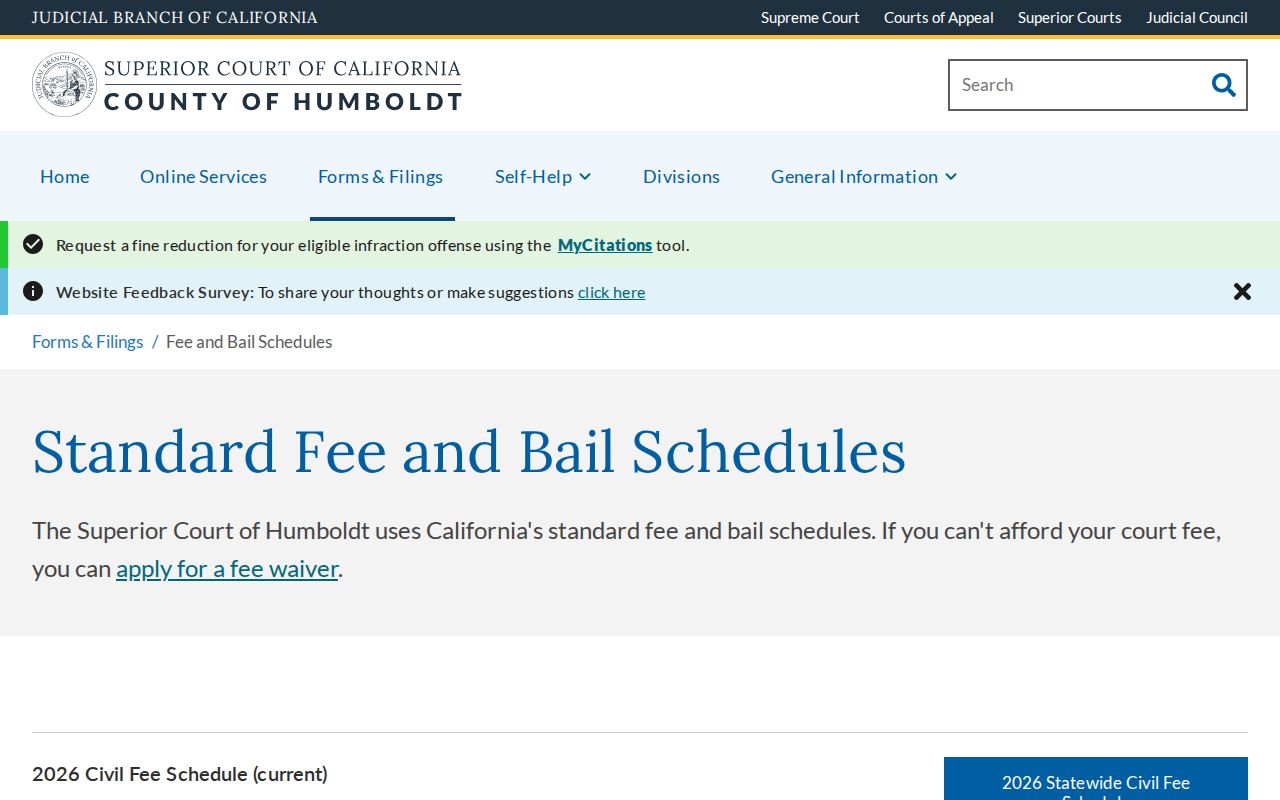
Ask whether certification is necessary because a certified disposition is a different product from an ordinary informational copy.
Criminal Case Stages in Humboldt County
After the district attorney files charges, arraignment is the first formal court stage. The judge advises the defendant of the charges and rights, may raise or lower bail, and takes a plea of guilty, not guilty, or sometimes nolo contendere. In a felony case with a not-guilty plea, a preliminary hearing lets the prosecution present evidence that a felony was committed and that the defendant should be held to answer.
Case flow: Charges Filed › Arraignment › Pretrial › Plea or Trial › Disposition › Sentencing
A recent Humboldt County arrest record may precede the court filing, so check jail custody separately when timing matters.
Drug Court and Specialty Supervision
The Humboldt courthouse directory identifies Drug Court in Room 304, with program information available through Humboldt Adult Drug Court at 707-476-2371. Adult Drug Court probation services operate at 555 H Street and can be reached at 707-444-0600. This county-specific track can produce docket entries and supervision conditions that need context beyond a short portal result.
Drug Court participation does not move the court file to a separate city court. The Superior Court remains the case custodian, while the county Probation Department handles the supervision component. When reading a docket, distinguish the judge's orders from probation's later administration of those conditions.
The Adult Probation Services page supplies the local supervision contact behind those court orders.
When ePay-it Finds No Humboldt Case
First confirm spelling, date of birth, and whether the item is still only an arrest or booking record. Charges can take time to reach the Superior Court, and a sheriff's custody entry does not guarantee that the district attorney filed a case. Next, check the limited court calendar if a hearing is expected soon. Remember that confidential matters may be hidden or may omit the party name.
If those checks do not resolve the issue, call Court Operations or the Criminal/Traffic Division. Provide the person's full name, date of birth, and any known arrest date or case number. The clerk can explain the proper inquiry or copy procedure without turning a blank online result into an unsupported conclusion.
Record distinction: A Humboldt Superior Court file documents one prosecution. A California DOJ Record Review is the official fingerprint route for reviewing your own statewide criminal-history record.
Access Rules for Case Records
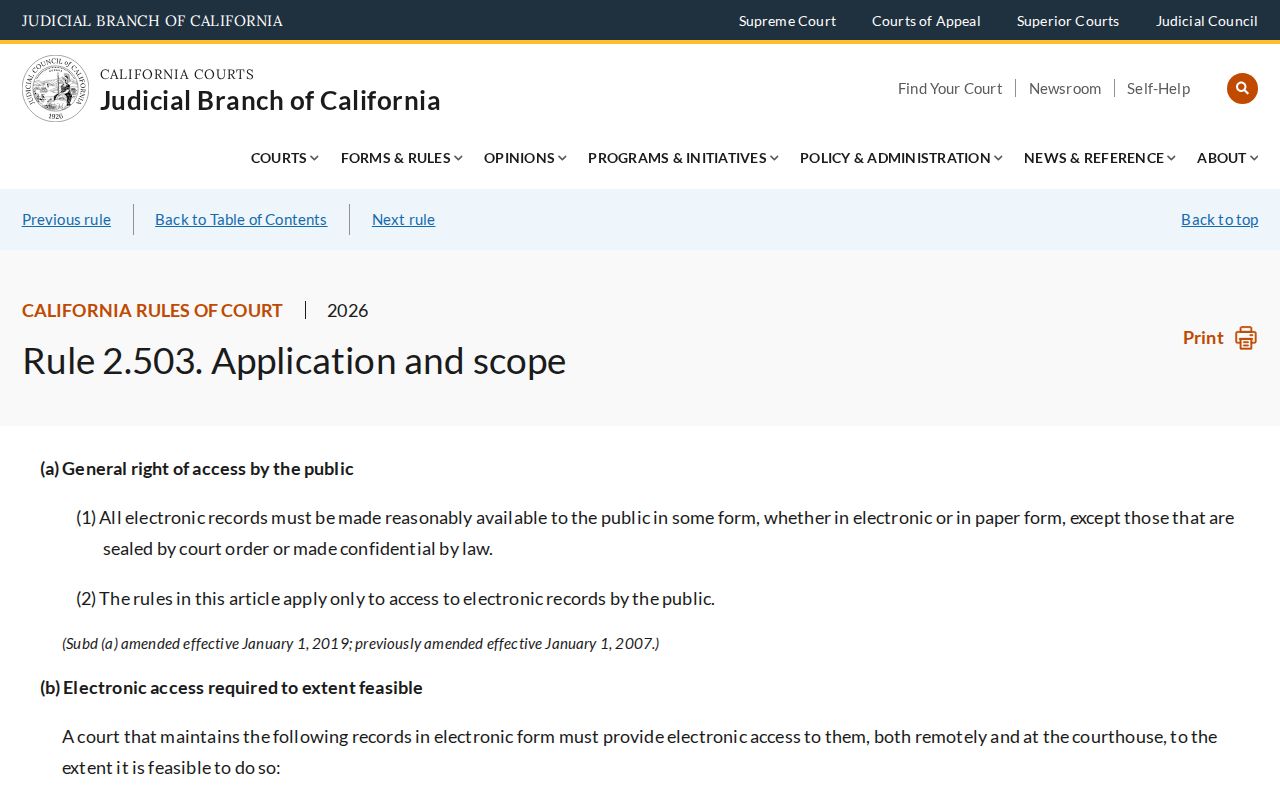
California court records are generally open, but online access is not identical to courthouse access. California Rule of Court 2.503 governs electronic access and helps explain why a public portal may provide less than the complete file. Juvenile matters, sealed records, confidential case types, and protected personal information can be omitted or redacted.
The rule's electronic-access capture reflects those statewide limits.
A blank ePay-it result or nameless calendar line should lead to the clerk, not to a conclusion about the person's history.
The courthouse itself also carries local civic history. The county's courthouse dedication and time capsule account documents that setting.
Today, that physical court remains important because complete filings and copies are not replaced by a statewide online criminal docket.